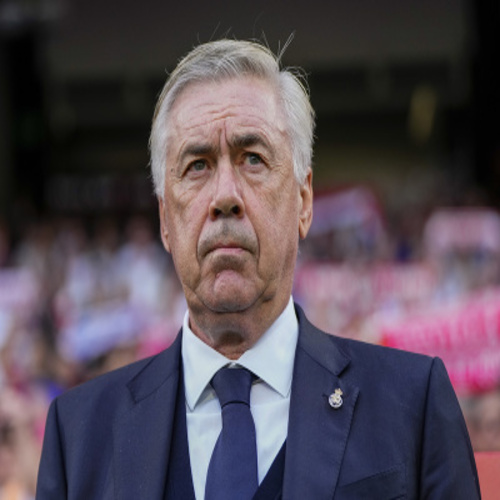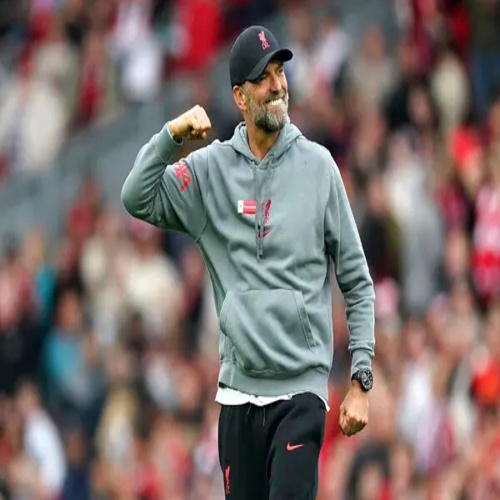
When one thinks of Pep Guardiola, one often equates him to possession based dominant football, scoring a lot of goals and ‘tiki-taka’. When one thinks of Klopp, on the other hand, one thinks of the Gegenpress and really intense heavy metal football, also scoring a lot of goals. Both Pep and Klopp are very particular about their press, and are accustomed to winning trophies. When one thinks of the anti-pep, one often thinks of someone like Diego Simeone, whose teams sit deep and play counter attacking football. This is where the misconceptions start. A common misconception about teams playing a low block is that they don’t have control, when actually, they always look to maintain control out of possession, staying compact in their shape, and preventing central progression. This very clear structure makes it clear that Simeone isn’t all that different from Pep
Pep Guardiola first and foremost wants control throughout the pitch. He achieves this through his rigid positional structure and a string of short passes to create controlled overloads in particular areas of the pitch and break opposition teams down. Pep himself said that he hates the term tiki taka, calling it “Meaningless passing”. All his teams have historically looked to maintain control of the game by keeping most of the ball and having a rigid structure both in possession and out of possession. Pep has historically made use of at least 1, if not 2 pivots in all his teams. Whether it be Busquets in Barcelona, Lahm and Kimmich in Bayern, Fernandinho, Rodri, and more recently, John Stones, in Manchester City. The pivots are absolutely essential to his teams, ensuring progression of the ball from deeper areas to more advanced areas, ensuring control in the middle third while progressing to the final third. This is his biggest strength, but also perhaps his biggest weakness, as Pep’s teams tend to perform far worse when their best pivot is unavailable. This was best evidenced by the matches City lost when Rodri was unavailable this season, losing against Aston Villa, Arsenal and Wolves. Pep cannot be equated to using any one formation or structure, given that he has been managing for over 20 years and has managed a wide array of squads. In Barcelona, he employed Messi as a false 9, in Bayern he employed Lewandowski as an out and out striker, and in Manchester City, he employed a false 9 when Aguero left the club, and with Aguero, and more recently with Haaland, employed them as out and out strikers. In the historic Centurion season, Pep employed his wingers in goal scoring roles, whereas in the treble winning 22/23 season, his wingers were touchline hugging wingers with the main role being ball retention. Another common misconception about Pep Guardiola is that he requires possession to control games. In the 22/23 season, in his 3-0 win against Bayern, he only had 44% possession. In a 3-1 win over Arsenal at the Emirates last season, he had just 36% possession. Pep is just as particular about his team’s structure out of possession as he is in possession. In fact, one of the main reasons Man city haven’t been as good this season as they were last season is that they couldn’t maintain their out of possession structure, resembling a compact 4 4 2 with Kevin De Bruyne pressing high as the second striker and the other 8(Gundogan last season, no stable number 8 this season) to drop into a double pivot. This exact profile has been missing in Manchester City this season, due to which they have been getting exposed on the counter. Pep’s favoured system in possession is a 3 2 5, with 2 pivots, 3 defenders in their rest defence, two 8s high up the pitch, touchline hugging wingers, and a forward outlet. He creates very specific patterns of play to achieve this shape, and through many passes and rotations among players, create overloads in specific areas of the pitch and break down oppositions in a controlled fashion.
From all that, we can concur that the main philosophy that Pep follows is control, both in possession and out of possession. Jurgen Klopp, on the other hand, thrives on chaos. Klopp has been quoted saying Football needs emotion. At the peak of his powers between 2018 and 2020, winning a champions league and a premier league title, his system was built around emotion and chaos. A front 3 of Mane, Firmino and Salah, Overlapping full backs, extreme engines in midfield. The team was more than capable of building up with structure, but equally capable of building vertically, embracing unpredictability. The midfielders had freedom to drop back in build up, fullbacks had freedom to push up, the front 3 had freedom to run in behind or drop deep, and most importantly, Liverpool weren’t afraid to go direct and long, with ball playing centre backs, and also through crosses into the box, with Trent and Robertson being at the peak of their powers. Most importantly, the midfield, a complete antithesis of Pep’s midfield. Fabinho was far from Fernandinho in terms of his ball playing ability, but his incredible ball winning ability and his skill in committing tactical fouls made him a vital asset. Pep’s number 8s have always been very technical and creative. Klopp’s midfield options of Wjinaldum, henderson, Keita and Milner are hardly technical or creative, but their engines were irreplaceable and an essential cog in the Liverpool machine, constantly dropping deep out of possession to cover for the fullbacks, or pressing high to win the ball back. Now getting to the biggest aspect that made Liverpool what they were, their press. The most interesting thing about Liverpool is the fact that they had no trigger in their press. A trigger is a particular action by the opposition team that acts as a starting point of a high pressing sequence from your team. Pep’s teams typically utilise wide passes as triggers to begin the high press and attempt to win the ball back, while being controlled until the trigger occurs. Liverpool, having no trigger, could very unpredictably start pressing high with the midfielders and the front line both pressing to choke opponents and win the ball back. He focused on using unpredictability and speed to create overloads on the pitch, both in and out of possession, embracing a lack of structure and rigidity.
In fact, these football beliefs hold true even today, with vastly different squads for both managers. Pep’s Man City still play very controlled, possession heavy football with lots of passes per attacking sequence, breaking teams open in a controlled fashion, whereas Liverpool didn’t have a particular preference, being capable of playing slowly and playing many passes, but also playing very direct, fast football. This highlights their unpredictability to this day.
This is even clearer in their pressing, with Liverpool still having the most aggressive and efficient press in the league, having the lowest Passes per defensive action(PPDA) in the league, meaning that they are the fastest team to win the ball back, while Man city, still on the upper end of the spectrum, have a very controlled press
The end result is the same for both managers: Lots of goals, beautiful football, lots of trophies, and an incredible rivalry. To counter Pep’s structure and control, Klopp has his unpredictability and heavy metal football. With the Pep-Klopp Citypool era coming to an end this summer, I doubt that we will ever see two managers so incredibly successful, yet so perfectly opposite to each other. It truly was a rivalry for the ages.